

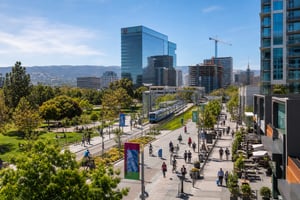
Downtown San Jose sits at a pivotal point in its development trajectory. For individuals evaluating whether this market still represents a growth opportunity, the answer depends on reading the right signals. This guide covers the essential indicators that reveal whether downtown momentum is building, stalling, or accelerating.
Urban Catalyst has spent years developing ground-up projects in downtown San Jose’s Opportunity Zones. The following framework draws on both publicly available data and the perspective that comes from active development in the market.
By the end of this guide, you will understand how to evaluate housing metrics, commercial development activity, demand drivers, and urban infrastructure investments. These indicators collectively paint a picture of downtown San Jose's growth trajectory for investors considering allocations to this market.
Key Takeaways: How to Evaluate Downtown San Jose Growth in 2026
- Housing supply constraints, high local incomes, and Silicon Valley employment fundamentals can support rental demand in downtown San Jose.
- Entitlement and permitting activity reveals future supply pipelines before construction becomes visible on the ground.
- Urban Catalyst’s active development portfolio reflects a long-term commitment to downtown San Jose.
- Transit-oriented development around Diridon Station, Caltrain, and the future BART Phase II extension signals long-term infrastructure commitment, though BART service to downtown remains a long-term project.
- Event-driven economic activity from conventions, sports, and regional tourism can create periodic demand for hotels, restaurants, and retail in and around the downtown core.
Why Downtown San Jose Deserves Investor Attention in 2026
Downtown San Jose represents the urban core of Silicon Valley, with proximity to major technology employers including Adobe, Google, Apple, Cisco, and many other companies across the broader South Bay. Adobe maintains a major downtown headquarters presence, while Google's approved Downtown West plan remains one of the most significant long-term development plans in the Diridon Station area.
Recent Census QuickFacts data reinforces the supply pressure in the surrounding market. Santa Clara County had an estimated 711,927 housing units in 2025, while building permits totaled 5,323 for the year. That means newly permitted housing represented less than 1% of the county's existing housing stock, underscoring why new multifamily supply in transit-served locations remains relevant to the downtown San Jose investment thesis.
Source: U.S. Census Bureau QuickFacts, Santa Clara County, California, 2025 housing units and 2025 building permits.
The city also includes designated Opportunity Zones, creating tax-advantaged investment pathways for investors with eligible capital gains to deploy. This designation has attracted development capital to the downtown area over the past several years, especially for projects that require patient capital and multi-year execution timelines.
What Are the Primary Housing Market Indicators to Track?
Housing market indicators tell you whether demand exceeds supply and how that balance is shifting over time. For downtown San Jose, several metrics stand out as particularly informative for investment evaluation.
Vacancy Rates and Absorption Trends
Vacancy rates reveal how quickly available units are being occupied. A declining vacancy rate indicates absorption outpacing new deliveries. In downtown San Jose, multifamily vacancy has generally tracked below the regional average despite new construction completions.
Absorption data shows how many units are being leased during a given period. Positive absorption during periods of new deliveries suggests demand remains strong enough to absorb additional supply. Negative absorption can signal oversupply conditions.
Rent Growth Patterns
Rent growth measures the percentage increase in asking rents year-over-year. Downtown San Jose has experienced rent recovery following pandemic-era adjustments, with asking rents trending upward as employment levels have stabilized.
Effective rents, which account for concessions and incentives, paint a clearer picture than asking rents alone. When the gap between asking and effective rents narrows, it indicates landlords feel confident in demand.
Permits and Entitlement Activity
Building permits signal future supply. Tracking permits filed for multifamily construction reveals what the competitive landscape will look like in two to three years. A surge in permits could indicate future supply pressure, while a slowdown suggests tightening conditions.
Entitlement timelines in San Jose typically run 18 to 24 months for complex projects. This means today’s permit activity translates to deliveries in late 2027 or 2028, giving current investors a window to position before that supply arrives.
How Do Commercial Development Signals Indicate Growth?
Commercial real estate activity reflects business confidence in the downtown market. When companies lease office space, retailers sign leases, restaurants open, and hospitality projects move forward, those decisions can indicate long-term commitment to the area.
Office Leasing Activity
Office leasing volumes indicate employer demand for downtown San Jose workspace. While hybrid work has altered patterns, technology companies continue to establish or maintain headquarters in the area. Adobe's presence downtown anchors significant daily foot traffic.
Pre-leasing activity in under-construction office buildings reveals tenant appetite before delivery. Strong pre-leasing suggests employers see value in downtown locations despite the flexibility offered by remote work arrangements.
Retail and Restaurant Openings
Retail tenant commitments reflect expectations about foot traffic and consumer spending. New restaurant openings, in particular, can signal confidence in evening and weekend activity.
Urban Catalyst's Paseo project has attracted experiential and dining tenants including Urban Putt and Eos & Nyx. The project renovated a former 12-screen movie theater into roughly 75,000 square feet of office space and 25,000 square feet of retail, contributing to a more active downtown dining and entertainment environment.
When destination tenants open downtown, it can help validate the market to other operators. Local independent operators often follow as the area gains visibility and foot traffic becomes more predictable.
Hospitality Development
Hotel projects require significant capital and long development timelines, making them strong indicators of investor confidence. Urban Catalyst's TownePlace Suites by Marriott has demonstrated the viability of hotel operations downtown, with strong occupancy during major events.
Convention center bookings and major event calendars drive hotel demand in predictable patterns. The San Jose McEnery Convention Center anchors this activity, with events like NVIDIA GTC generating concentrated demand.
What Demand Drivers Support Downtown San Jose Growth?
Demand drivers are the underlying forces that create the need for housing, commercial space, and urban amenities. Understanding these drivers helps investors assess whether growth conditions are temporary or structural.
Employment Growth and Job Quality
Employment data reveals the strength of the underlying economic engine. San Jose's unemployment rate has remained below state and national averages, supported by technology sector hiring. Job growth in high-wage categories creates housing demand at premium price points.
The presence of major employers like Google, Apple, Cisco, and Adobe creates employment stability that supports long-term housing demand. These companies' expansion plans directly influence downtown residential absorption.
Population Trends and Migration Patterns
Population growth data indicates whether more people are moving to the area than leaving. Net domestic migration, combined with international immigration, determines the demand pool for housing. San Jose has experienced population fluctuations, but maintains its position as a major metropolitan center.
Household formation rates, particularly among younger professionals, drive apartment demand. Downtown urban living appeals to demographics that prioritize walkability and proximity to employment.
Major Events and Convention Activity
Event-driven demand can demonstrate the downtown core's capacity to attract visitors and support hotel, restaurant, and retail activity. The San Jose McEnery Convention Center anchors this activity, with major conferences such as NVIDIA GTC drawing large technology and AI audiences to the convention center area.
Regional sports and entertainment events can also influence demand. Super Bowl LX was held at Levi's Stadium in Santa Clara in February 2026, and the Bay Area is hosting 2026 FIFA World Cup matches at Levi's Stadium. While economic impact estimates for major events should be treated cautiously, these events can still create short-term demand surges for lodging, dining, transportation, and visitor services across the region.
From Urban Catalyst's perspective, this reinforces a consistent theme: well-located assets near downtown amenities, transit, and visitor demand drivers may be better positioned to benefit from periodic activity surges than assets disconnected from those patterns.
How Does Transit Infrastructure Influence Growth Potential?
Transit infrastructure investments signal long-term public commitment to regional connectivity and urban density. These investments take years to plan and execute, making them important indicators of where growth is being directed.
BART Extension to Downtown San Jose
The BART Silicon Valley Extension represents a multi-billion-dollar commitment to connecting downtown San Jose to the broader regional transit network. Phase II will bring BART directly to Diridon Station, creating a multimodal hub connecting rail, bus, and future high-speed rail.
Transit-oriented development around stations historically generates significant density increases. Properties located near future BART stations are positioned to benefit from increased connectivity.
Caltrain Electrification
Caltrain’s electrification is complete: full electrified service launched in September 2024, delivering faster, more frequent trains and added capacity along the Peninsula corridor. The results have been substantial—ridership climbed about 47% in fiscal year 2025 to roughly 9.1 million passengers, and June 2025 ridership was up about 76% year-over-year, topping 1 million riders in a single month for the first time since the pandemic.
This connectivity enhancement expands the effective labor market for downtown employers while making the area more attractive to residents who value transit access.
Diridon Station Area Planning
The Diridon Station area represents one of the most significant urban development opportunities in Silicon Valley. Google's Downtown West project envisions millions of square feet of office, residential, and retail space adjacent to the transit hub.
This scale of development, combined with public infrastructure investments, signals sustained long-term commitment to downtown San Jose as a regional center. Urban Catalyst's projects are designed with this type of environment in mind.
What Role Do Opportunity Zones Play in Downtown San Jose Investment?
Opportunity Zones create tax-advantaged pathways for deploying capital gains into qualifying investments. Downtown San Jose's designation as an Opportunity Zone has attracted significant development capital from investors with both return objectives and tax planning goals.
Understanding the Tax Benefits
Opportunity Zone investments allow investors to defer capital gains taxes by investing in Qualified Opportunity Funds. If held for 10 years, any appreciation on the Opportunity Zone investment itself may become tax-free, creating a powerful incentive for long-term holds.
This structure aligns investor horizons with development timelines, making patient capital available for ground-up construction projects that require extended execution periods.
How Urban Catalyst Uses Opportunity Zone Structures
Urban Catalyst has developed multiple projects using Opportunity Zone fund structures, including multifamily, hospitality, and mixed-use developments in downtown San Jose.
The vertically integrated model means Urban Catalyst manages the entire development process, from acquisition through construction to disposition. This approach gives investors access to institutional-quality real estate development without direct property management responsibilities.
Evaluating Fund Manager Track Records
Fund manager experience matters significantly in Opportunity Zone investing. Urban Catalyst has been included in Novogradac's 2025 ranking of Qualified Opportunity Fund managers, coming in at 36th out of 1,037 QOF managers tracked nationwide. That places the firm in the top 4% of managers in Novogradac's survey for the period.
Track record evaluation should include examining prior fund performance, development execution, and investor communication practices. Transparent reporting and regular updates indicate professional fund management.
How Do You Assess Supply Pipeline and Competition?
Understanding what's being built and by whom helps investors evaluate competitive dynamics. A crowded supply pipeline could pressure rents and extend lease-up periods, while constrained supply supports pricing power.
Tracking Under-Construction Projects
Under-construction projects represent committed supply that will deliver over the next 12 to 36 months. Tracking these projects by unit count, expected delivery date, and target demographic reveals the competitive landscape facing any new investment.
Project delays are common in development, so published delivery timelines should be viewed with appropriate caution. Material costs, labor availability, and permitting challenges can extend construction periods.
Analyzing Developer Activity
Active developers in a market indicate institutional confidence in growth fundamentals. When experienced developers with access to capital continue pursuing projects, it signals their underwriting supports profitable outcomes.
Developer pullback, conversely, can indicate concerns about supply-demand balance, construction costs, or financing availability. Monitoring developer activity gives early warning of shifting market sentiment.
Understanding Absorption Capacity
Absorption capacity measures how much new supply the market can absorb per quarter without significant concession activity. Historical absorption rates, combined with employment projections, help estimate whether planned supply exceeds likely demand.
Downtown San Jose’s absorption has generally remained positive through recent delivery cycles, suggesting demand fundamentals continue to support new construction.
What Economic Indicators Should Investors Monitor?
Economic indicators set the context for real estate fundamentals. Employment, wage growth, and business formation collectively determine the demand environment facing any downtown investment.
Unemployment and Labor Force Participation
Unemployment rates indicate overall economic health. San Jose’s unemployment rate has generally tracked below state and national averages, reflecting the strength of the technology-driven economy.
Labor force participation rates reveal whether people are actively working or looking for work. High participation combined with low unemployment indicates a tight labor market that supports wage growth.
Wage Growth and Income Levels
Median household income in San Jose ranks among the highest in the nation, driven by technology sector compensation. High incomes support premium rent levels and absorb new luxury products without significant concession pressure.
Wage growth data indicates whether incomes are keeping pace with rent increases. When wages outpace rents, affordability improves even as nominal rents rise.
Business Formation and Venture Capital Activity
New business formation indicates entrepreneurial confidence. Silicon Valley's venture capital ecosystem continues to fund startups that hire employees and lease office space. This activity pipeline supports future employment growth.
Venture capital investment levels, while volatile, indicate the health of the innovation economy. Strong venture activity correlates with future hiring and housing demand from high-income workers.
How Do You Evaluate Urban Livability and Amenity Development?
Urban livability factors influence tenant attraction and retention. Residents choosing downtown locations expect walkable access to dining, entertainment, parks, and services. Investment in these amenities indicates municipal commitment to urban quality of life.
Parks and Public Space Investments
Park improvements and public space development enhance downtown livability. The city's investments in plazas, green spaces, and pedestrian infrastructure create amenities that differentiate urban living from suburban alternatives.
Trail connectivity, particularly along the Guadalupe River, offers recreational amenities for downtown residents. These investments attract residents who value outdoor access.
Retail and Dining Ecosystem
A diverse retail and dining ecosystem reduces residents' need to travel outside downtown for daily needs. Grocery stores, pharmacies, and service retail anchors daily activity patterns.
Dining options ranging from casual to fine dining create evening and weekend activities. Urban Catalyst's Paseo project has activated street-level retail that contributes to this ecosystem.
Safety and Urban Management
Public safety perceptions influence residential location decisions. City investments in lighting, public safety programs, and urban cleanliness affect how comfortable residents feel in downtown environments.
Business improvement districts and downtown associations coordinate private sector efforts to maintain and enhance urban quality. Active district management indicates stakeholder commitment to downtown success.
What Data Sources Support Downtown San Jose Market Analysis?
Reliable data sources enable evidence-based investment decisions. For the downtown San Jose evaluation, several public and subscription resources stand out as particularly useful.
Public Data Sources
The City of San Jose's planning department publishes permit data, zoning information, and development project lists. The San Jose Downtown Association tracks business openings, events, and district initiatives.
Census Bureau data covers demographic and household information. The Bureau of Labor Statistics publishes employment data at the metropolitan statistical area level.
Industry Research Reports
Commercial real estate brokerage firms publish quarterly market reports covering vacancy, rent, and absorption trends. CoStar, CBRE, JLL, and Cushman & Wakefield all track the San Jose multifamily and office markets.
These reports aggregate transaction data and offer market commentary from practitioners active in the area. Comparing multiple sources helps identify consensus views and outlier perspectives.
Local News and Economic Development Updates
The Silicon Valley Business Journal covers development projects, company relocations, and economic trends. The San Jose Spotlight offers independent local journalism on city planning and policy decisions.
San Jose Economic Development produces reports on business climate and investment attraction efforts. These sources help investors stay current on factors affecting downtown growth.
How to Build a Downtown San Jose Investment Thesis
An investment thesis articulates why you believe an investment will perform well. For downtown San Jose, building a thesis requires synthesizing the indicators discussed throughout this guide.
Identifying Your Investment Horizon
Development investments require patience. Ground-up construction projects may take three to five years from land acquisition to stabilization. Opportunity Zone investments are generally structured around long holds (10 years) to pursue the program’s tax benefits.
Shorter-term investors might focus on existing stabilized assets. Longer-term investors can accept development risk in exchange for potentially higher returns.
Matching Investment Structure to Goals
Direct property ownership offers control but requires capital and management capability. Fund investments offer diversification and professional management with less control over individual asset decisions.
Fund structures like Urban Catalyst’s allow eligible accredited investors to participate in ground-up development without direct property ownership responsibilities. This approach may suit investors with capital gains to deploy who prefer professional management.
Conducting Due Diligence
Due diligence should verify the indicators discussed in this guide using current data. Market conditions change, and assumptions should be stress-tested against downside scenarios.
For fund investments, review the private placement memorandum, understand fee structures, and evaluate the manager's track record. Ask questions about how the fund manager has performed during prior market cycles.
In Conclusion: Downtown San Jose Growth Evaluation for Real Estate Investors
Downtown San Jose presents a growth story supported by multiple converging factors. Employment fundamentals remain strong, transit infrastructure investments signal long-term commitment, and Opportunity Zone benefits create tax-advantaged investment pathways.
Evaluating this market requires tracking housing metrics, commercial development activity, demand drivers, and supply pipeline dynamics. The indicators discussed in this guide form a framework for ongoing market monitoring.
FAQs About Downtown San Jose Growth Indicators for Real Estate Investors
Is Downtown San Jose still a growth market in 2026?
Downtown San Jose continues to show growth characteristics supported by Silicon Valley employment fundamentals, high regional incomes, transit infrastructure investment, and ongoing development activity. Investors should also monitor current vacancy, absorption, rent growth, financing conditions, and project delivery timelines before drawing conclusions about near-term performance.
What makes Downtown San Jose potentially attractive for real estate investment?
Downtown San Jose benefits from proximity to major technology employers, a highly educated regional workforce, Opportunity Zone tax advantages, Caltrain connectivity, and long-term infrastructure planning around Diridon Station and BART Phase II. The area also benefits from convention, university, cultural, dining, and event-related demand drivers.
How do Opportunity Zones affect Downtown San Jose investment returns?
Opportunity Zone investments allow deferral of tax on eligible reinvested capital gains and potential exclusion of tax on the investment’s appreciation if held for at least 10 years. The incentive was made permanent under the 2025 federal tax law, with a new designation map effective January 1, 2027. Tax outcomes depend on individual circumstances and program compliance, so investors should consult their own tax advisors.
Where applicable, this tax treatment can affect after-tax returns relative to conventional real estate investments, but it does not guarantee any particular result.
What transit improvements will impact Downtown San Jose growth?
BART extension to Diridon Station, Caltrain electrification, and Google's Downtown West development collectively represent billions of dollars in infrastructure and private investment. These improvements will enhance connectivity and density.
Transit-oriented development around these nodes historically generates significant value creation for nearby properties.
How can accredited investors access Downtown San Jose real estate opportunities?
Accredited investors can access Downtown San Jose real estate through direct property acquisition, REIT investments, or Qualified Opportunity Funds. Urban Catalyst offers fund structures that allow participation in ground-up development projects.
Fund investments offer diversification across multiple projects and professional management of the development process.
This material is for educational purposes only. It is not tax, legal, accounting, investment, or securities advice. It is not an offer to sell or a solicitation of an offer to buy any security or interest in any fund. Opportunity Zone tax benefits are subject to detailed rules, holding periods, and future guidance and are not guaranteed. Real estate investments involve risk, including illiquidity and possible loss of principal. Investors should consult their own tax, legal, and financial advisors.
Important Disclosures
The contents of this communication: (i) do not constitute an offer of securities or a solicitation of an offer to buy securities, (ii) offers can be made only by the confidential Private Placement Memorandum (the “PPM”) which is available upon request, (iii) do not and cannot replace the PPM and is qualified in its entirety by the PPM, and (iv) may not be relied upon in making an investment decision related to any investment offering by an issuer, or any affiliate, or partner thereof ("Issuer").
All potential investors must read the PPM and no person may invest without acknowledging receipt and complete review of the PPM.
With respect to any performance levels outlined herein, these do not constitute a promise of performance, nor is there any assurance that the investment objectives of any program will be attained. All investments carry the risk of loss of some or all of the principal invested. Assumptions are more fully outlined in the Offering Documents/ PPM for the respective offering. Consult the PPM for investment conditions, risk factors, minimum requirements, fees and expenses and other pertinent information with respect to any investment.
These investment opportunities have not been registered under the Securities Act of 1933 and are being offered pursuant to an exemption therefrom and from applicable state securities laws. All offerings are intended only for accredited investors unless otherwise specified.
Past performance are no guarantee of future results. All information is subject to change. You should always consult a tax professional prior to investing. Investment offerings and investment decisions may only be made on the basis of a confidential private placement memorandum issued by Issuer, or one of its partner/issuers. Issuer does not warrant the accuracy or completeness of the information contained herein. Thank you for your cooperation.
Real Estate Risk Disclosure:
- There is no guarantee that any strategy will be successful or achieve investment objectives including, among other things, profits, distributions, tax benefits, exit strategy, etc.;
- Potential for property value loss – All real estate investments have the potential to lose value during the life of the investments;
- Change of tax status – The income stream and depreciation schedule for any investment property may affect the property owner’s income bracket and/or tax status. An unfavorable tax ruling may cancel deferral of capital gains and result in immediate tax liabilities;
- Potential for foreclosure – All financed real estate investments have potential for foreclosure;
- Illiquidity – These assets are commonly offered through private placement offerings and are illiquid securities. There is no secondary market for these investments.
- Reduction or Elimination of Monthly Cash Flow Distributions – Like any investment in real estate, if a property unexpectedly loses tenants or sustains substantial damage, there is potential for suspension of cash flow distributions;
- Impact of fees/expenses – Costs associated with the transaction may impact investors’ returns and may outweigh the tax benefits
- Stated tax benefits – Any stated tax benefits are not guaranteed and are subject to changes in the tax code. Speak to your tax professional prior to investing.
Opportunity Zone Disclosures
- Investing in opportunity zones is speculative. Opportunity zones are newly formed entities with no operating history. There is no assurance of investment return, property appreciation, or profits. The ability to resell the fund’s underlying investment properties or businesses is not guaranteed. Investing in opportunity zone funds may involve a higher level of risk than investing in other established real estate offerings.
- Long-term investment. Opportunity zone funds have illiquid underlying investments that may not be easy to sell and the return of capital and realization of gains, if any, from an investment will generally occur only upon the partial or complete disposition or refinancing of such investments.
- Limited secondary market for redemption. Although secondary markets may provide a liquidity option in limited circumstances, the amount you will receive typically is discounted to current valuations.
- Difficult valuation assessment. The portfolio holdings in opportunity zone funds may be difficult to value because financial markets or exchanges do not usually quote or trade the holdings. As such, market prices for most of a fund’s holdings will not be readily available.
- Capital call default consequences. Meeting capital calls to provide managers with the pledged capital is a contractual obligation of each investor. Failure to meet this requirement in a timely manner could elicit significant adverse consequences, including, without limitation, the forfeiture of your interest in the fund.
- Opportunity zone funds may use leverage in connection with certain investments or participate in investments with highly leveraged capital structures. Leverage involves a high degree of financial risk and may increase the exposure of such investments to factors such as rising interest rates, downturns in the economy or deterioration in the condition of the assets underlying such investments.
- Unregistered investment. As with other unregistered investments, the regulatory protections of the Investment Company Act of 1940 are not available with unregistered securities.
- It is possible, due to tax, regulatory, or investment decisions, that a fund, or its investors, are unable realize any tax benefits. You should evaluate the merits of the underlying investment and not solely invest in an opportunity zone fund for any potential tax advantage.
The above material cannot be altered, revised, and/or modified without the express written consent of Urban Catalyst.